On maximalism, restraint and the Italian art of making things look effortless.
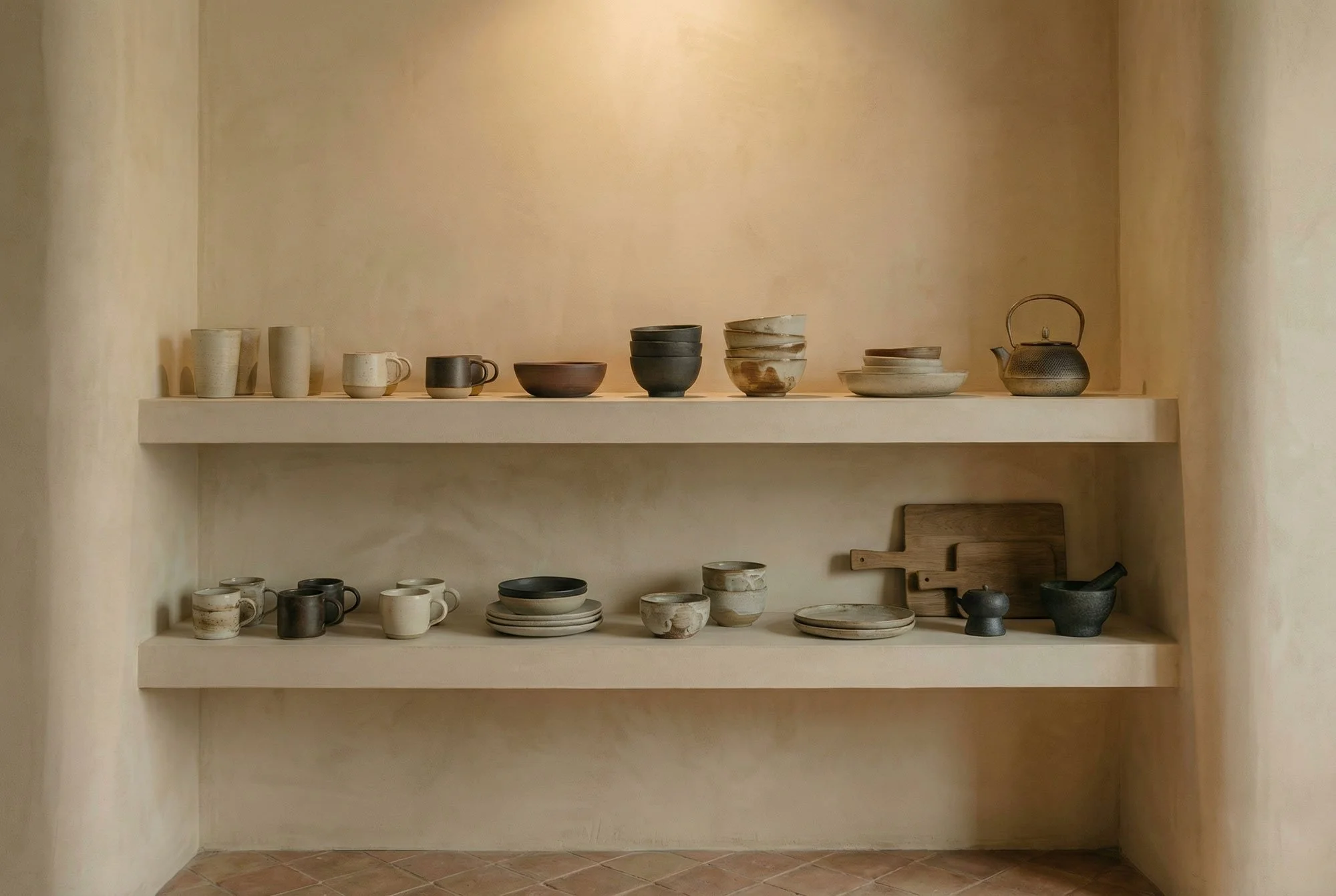
I've always considered myself a maximalist. Give me beautiful fabrics, unexpected colour combinations, sculptural furniture and objects with a story to tell, and I'm a very happy woman. I've never been particularly interested in spaces that feel too perfect, too coordinated or, worse, completely devoid of personality.
And if I'm being entirely truthful, I probably still am a maximalist.
But somewhere along the way, I've learnt something rather important about design. Sometimes, the most interesting thing you can add to a room is absolutely nothing.
There is a wonderful Italian word, sprezzatura, that I've become quite fond of. First described by Baldassare Castiglione in the sixteenth century, it refers to the art of making something difficult appear effortless. A kind of studied nonchalance. The ability to look as though you haven't tried particularly hard, when in fact you've considered every last detail.
The Italians seem to understand this instinctively. Think of a beautifully dressed woman with slightly undone hair, an oversized shirt and a piece of jewellery that probably shouldn't work with the outfit, but somehow makes it. Nothing feels forced. Nothing is trying too hard. And yet, the whole thing is impossibly chic.
I think the same principle applies beautifully to interiors.
A little bit of everything. But not everything.
For a long time, I associated interesting interiors with abundance. More texture, more colour, more layers, more things to look at. And don't get me wrong, I still believe a room should have a little something unexpected. A piece that makes you look twice. A colour combination that feels slightly unconventional. Something that gives the space a sense of humour.
But I've come to realise that when everything is competing for attention, nothing really gets the chance to shine.
That extraordinary piece of marble? It doesn't necessarily need an equally extraordinary pendant above it. The beautiful antique chair you've spent months searching for? Perhaps it deserves a little breathing room rather than another three objects keeping it company.
It's not about having less for the sake of having less. It's about knowing what deserves the attention.
And, perhaps more importantly, knowing when to leave something alone.
Restraint doesn't have to mean beige.
I think restraint has developed a rather unfortunate reputation.
Somewhere along the way, it became synonymous with minimalism, perfectly empty surfaces and interiors so carefully edited that you're almost afraid to put your coffee down.
That's not the kind of restraint I'm interested in.
I love homes that feel collected rather than decorated. Homes with books that have actually been read, furniture that doesn't necessarily match and objects brought back from travels. I love the unexpected, the slightly eccentric and the beautifully imperfect.
A room can be full of colour and still feel considered. It can combine different periods, materials and influences without becoming chaotic. Restraint isn't necessarily about how many things you have. It's about the relationship between them.
Sometimes that means introducing something bold. Other times, it means having the confidence not to.
The beauty of looking effortless.
This is where sprezzatura becomes particularly interesting to me.
Some of the most memorable interiors I've encountered have an almost accidental quality to them. Nothing looks overly arranged. The furniture feels as though it has always belonged there. The materials sit comfortably alongside one another, and the whole space has an ease that is surprisingly difficult to achieve.
Of course, the irony is that making something look effortless often requires an extraordinary amount of effort.
It's in the proportions, the balance, the subtle shifts in colour and texture. It's knowing when two things complement each other and when they need a little distance. It's understanding that not every corner needs a moment, and not every beautiful object needs to come home with you.
That last one is a lesson I'm still working on.
Knowing when enough is enough.
I don't think I'll ever stop loving maximalism. I'll probably always be drawn to unusual objects, bold materials and interiors that aren't afraid to have a personality.
But my relationship with those things has changed.
These days, I'm less interested in how much I can bring into a space and more interested in how beautifully everything can coexist. I want the pieces I choose to have a reason for being there, whether that's because they're functional, meaningful or simply too wonderful to resist.
And I want the people living in those spaces to feel comfortable enough to make them their own.
Perhaps that's what I've come to appreciate most about sprezzatura. It isn't really about perfection. It's about confidence. The confidence to mix things that shouldn't work, to embrace a little imperfection and, occasionally, to walk away when there's still room for more.
I'm still a maximalist at heart.
I've just learnt that even the most beautiful room doesn't need to show you everything it has, all at once.
Recent Posts


A maximalist at heart, I've always loved bold colours, beautiful objects and interiors with personality. But over time, I've come to appreciate the art of knowing when enough is enough. A reflection on restraint, the Italian concept of sprezzatura, and why the most interesting spaces aren't always the ones with the most to say.